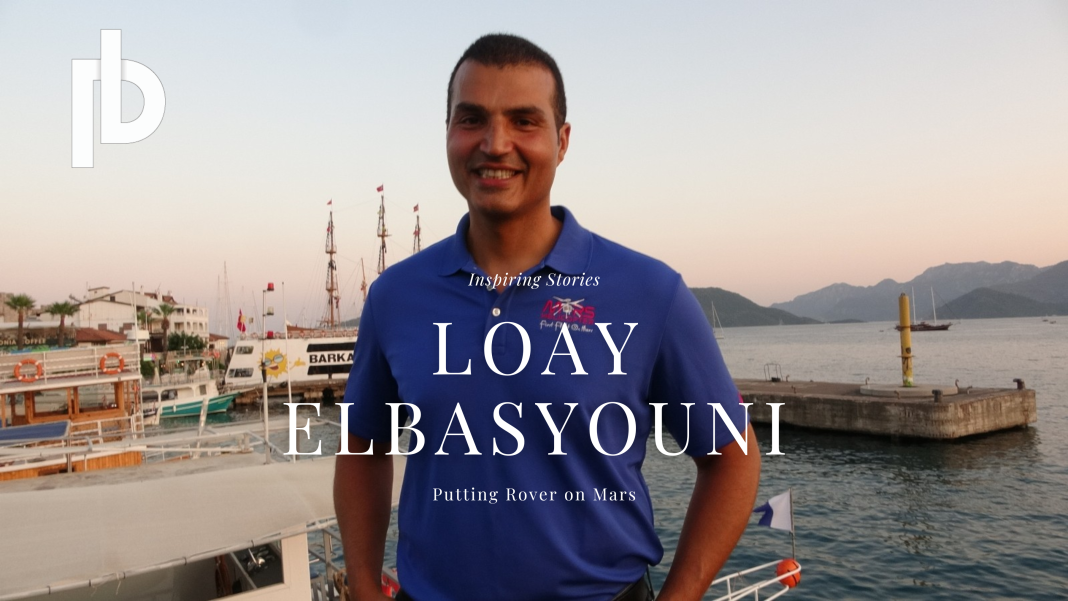
In the vast expanse of space exploration, brilliant minds emerge to drive innovation and redefine the boundaries of human knowledge. Among these trailblazers is Loay Elbasyouni, a Palestinian-American engineering leader whose exceptional career has left an indelible mark on the field. With his expertise in entrepreneurial and advanced engineering developments, Loay started his first business at the age of 10, a fact not widely known. He had many other businesses before pivoting to solving very challenging engineering problems. He was one of the first to work on electric cars and autonomous drones (UAVs). This eventually led him to his historical work on a robotic helicopter on Mars. Mr. Elbasyouni has played a pivotal role in designing and developing groundbreaking projects, including the Mars rover Perseverance and the Ingenuity helicopter. Let’s delve into his illustrious journey, achievements, and aspirations.
Loay Elbasyouni was born in Germany while his father pursued medical studies. He spent his formative years in Beit Hanoun, Gaza, where he experienced the challenging environment shaped by the First Intifada. Despite the hardships faced during that time, he attended UNRWA schools and developed a strong foundation for his education. At the age of eighteen, Elbasyouni embarked on a new chapter in the United States to pursue higher education. His dedication and passion for electrical engineering led him to earn a Master’s degree from the University of Louisville in 2005. Armed with a solid academic background, he embarked on a career that would blend his expertise with groundbreaking space exploration endeavors.
Elbasyouni’s journey in the engineering industry began in 2005. Later, in 2012, he joined a company focused on developing electric aircraft. In 2014, his talents caught the attention of NASA, and the company transitioned into a contractor for the prestigious space agency. Elbasyouni, an engineering lead, became an instrumental figure in the Mars helicopter team.
His notable contributions extend to the Mars rover Perseverance mission, which captivated the world in March 2021 by completing a record-breaking 51 flights on Mars. Elbasyouni’s expertise in electrical engineering played a pivotal role in the successful design and execution of this ambitious project. Equipped with cutting-edge scientific instruments, Perseverance aims to explore the Martian surface, search for signs of ancient microbial life, and lay the groundwork for future human missions to the Red Planet.
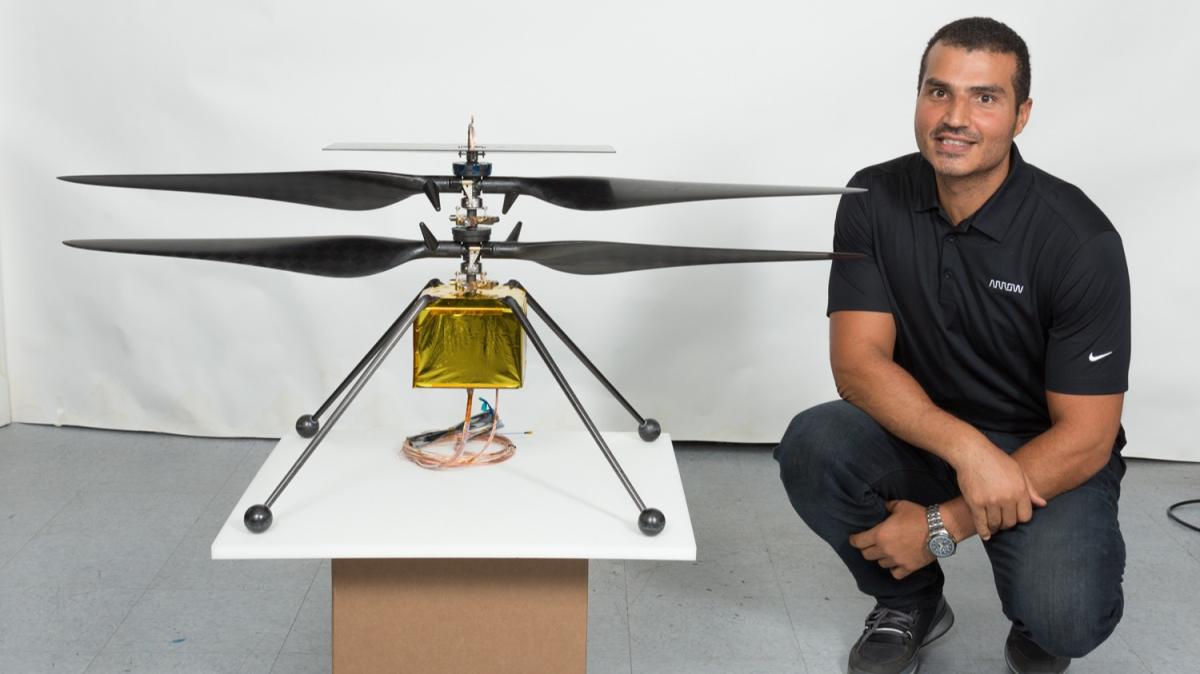
Undoubtedly, one of Elbasyouni’s remarkable achievements lies in his role as a chief engineer for the design team of the Ingenuity robotic helicopter. This groundbreaking aircraft achieved an unprecedented milestone as the first powered flight on another planet. Elbasyouni’s expertise in power electronics proved essential in overcoming the unique challenges posed by Mars’ thin atmosphere, making the historic flight of Ingenuity a reality.
Elbasyouni’s vision extends far beyond individual projects. With a passion for advancing space exploration, he seeks to harness his expertise in electrical engineering to develop innovative technologies that propel sustainable and efficient space missions. One of his primary goals involves exploring the potential of renewable energy sources to power spacecraft. By embracing renewable energy, Elbasyouni envisions a future where space missions rely on sustainable and environmentally friendly power systems. This not only reduces dependence on traditional energy sources but also opens up new possibilities for extended space exploration and potential colonization efforts. Furthermore, Elbasyouni actively cultivates collaboration and knowledge-sharing among engineers and scientists worldwide. He recognizes the transformative power of collective expertise and engages in public speaking engagements to share his knowledge, inspire people, and encourage them to pursue careers in STEM fields.
Loay Elbasyouni’s journey as a Palestinian-American electrical engineer represents the epitome of dedication, innovation, and a relentless pursuit of progress in space.
Welcome, readers, to another insightful interview with extraordinary individuals shaping the landscape of business, technology, and space exploration. In this special edition, we have the privilege of speaking with Loay Elbasyouni, a Palestinian-American electrical engineer who has left an indelible mark on the field of space research and innovation. As the lead electrical and power electronic engineer behind NASA’s Mars rover Perseverance and the Ingenuity helicopter, Elbasyouni has played a pivotal role in pushing the boundaries of space exploration. Join us as we delve into his remarkable journey, the challenges he faced, and his vision for the future of space technology.
– Thank you for joining us today, Mr. Elbasyouni. Could you please introduce yourself to our readers and provide an overview of your expertise and accomplishments?
It’s a pleasure to be here. I’m Loay Elbasyouni, an electrical engineer specializing in power electronics. My focus lies in electrification, and I’ve had the privilege of working on numerous cutting-edge projects related to space exploration. One of my most significant achievements was serving as the lead electrical and power electronic engineer for NASA’s Mars rover Perseverance and the Ingenuity helicopter. These projects exemplify the power of collaboration between governments, private companies, and individuals like myself to drive advancements in space technology.
– Your journey is truly inspiring, Mr. Elbasyouni. Can you share some insights into your background and how you found your way into the field of space research?
Certainly. I had a natural affinity for technical pursuits from a young age. Growing up, I was constantly exploring and tinkering with various things, seeking to understand how they worked and finding ways to fix them. This hands-on approach and curiosity led me to pursue a career in electrical engineering. After completing my Master’s degree in Electrical Engineering from the University of Louisville, I embarked on a path that eventually brought me to the forefront of space exploration. It has been an incredibly rewarding journey so far.
– Space research and exploration have become fiercely competitive on a global scale. How do you approach this competitive landscape, and how do you balance the scientific pursuit with the political dynamics?
The landscape of space programs is undoubtedly competitive, with nations vying for technological superiority. However, it’s important to recognize that collaboration is the bedrock of progress in space exploration. The initial foundations of the space program were built on international cooperation, and that spirit continues to drive advancements today. While political dynamics exist, I firmly believe in the power of science and the pursuit of knowledge. Through cooperation, we can transcend boundaries and achieve technological breakthroughs that benefit humanity as a whole.
– As the lead engineer for the Mars rover Perseverance and the Ingenuity helicopter, what were the main challenges you faced, and what successes did you encounter along the way?
Leading the electrical and power electronic engineering efforts for the Mars rover Perseverance and the Ingenuity helicopter presented unique challenges. One of the main obstacles we encountered was the need for lightweight components due to the harsh enviromet.
– Thank you for your understanding, Mr. Elbasyouni. Could you elaborate on the lightweight component challenge you faced during the Mars rover and Ingenuity helicopter projects?
Of course. The environment on Mars posed a unique set of constraints, particularly the thin atmosphere. As a result, every component we designed and utilized had to be exceptionally lightweight to ensure successful operations. Even a single component needed to be significantly lighter than its earthly counterparts. This meant reimagining traditional engineering norms and finding innovative solutions that would withstand the demanding conditions of the Red Planet.
– It’s fascinating to hear about the intricacies involved in designing for Mars. Moving forward, what were the pivotal moments or milestones that stood out during these missions?
One significant milestone was witnessing the Mars helicopter, Ingenuity, successfully completing its 34th flight attempt. Originally designed for only 3-5 flights, Ingenuity surpassed all expectations and demonstrated the feasibility of sustained flight on Mars. This accomplishment filled me with immense pride and highlighted the remarkable capabilities of our team and the technology we developed.
– Impressive indeed! Beyond the Mars missions, NASA recently launched a space defensive system. What are your thoughts on this program?
NASA’s success in launching a defensive system that intercepted an object approaching Earth marks a significant achievement. The ability to hit a moving object in space opens up possibilities for future missions, including the potential to alter the orbit of such objects. These endeavors are crucial for ensuring the safety of our planet and advancing our understanding of celestial objects.
– Over the past two decades, there have been remarkable advancements and achievements in space science and exploration. How do you view these developments, and what message would you like to convey to young people aspiring to enter this field?
The advancements we’ve witnessed in space science and exploration over the past two decades have been monumental. We are now entering an era where space is accessible to all, not limited to governments alone. The democratization of space presents exciting opportunities for young people to participate in research and exploration. My message to them is to pursue their passions relentlessly and recognize that space is not solely about astronomy. Fields like electrical engineering and other applied sciences have a significant role to play in shaping the future of space technology.
– Your insights are invaluable, Mr. Elbasyouni. Finally, what are your thoughts on the commercialization of space and the endeavors of private companies aiming to send humans to Mars and the Moon?
The commercialization of space has opened up a realm of possibilities. While certain limitations exist, such as infrastructure requirements for establishing cities on Mars, private companies have the right to dream and turn those dreams into reality. We may witness capsules on Mars in our lifetime, but the establishment of fully functioning cities will require significant investments and time. Nevertheless, commercialization has already revolutionized satellite communications and Earth-based technologies, and I anticipate further advancements in the future, including private space stations and increased satellite deployment.
– Thank you for sharing your insights, Mr. Elbasyouni. Looking ahead, what are your personal aspirations and goals within the field of space exploration and engineering?
As an engineer, my goal is to continue pushing the boundaries of what is possible in space exploration. I aim to contribute to the development of groundbreaking technologies that will enable us to explore celestial bodies more efficiently and unlock new scientific discoveries. Additionally, I am passionate about fostering international collaboration and ensuring that space exploration remains an inclusive endeavor where governments, private entities, and individuals from various backgrounds can work together towards a shared goal.
– Your dedication and vision are commendable, Mr. Elbasyouni. Finally, could you share any advice for aspiring engineers who wish to embark on a career in space exploration and contribute to the field?
Absolutely. My advice would be to cultivate a strong foundation in the fundamental sciences such as physics, mathematics, and engineering. Space exploration demands interdisciplinary knowledge and a solid understanding of core principles. Additionally, stay curious and never stop learning. The field is ever-evolving, and staying updated with the latest advancements and technologies will be crucial. Seek opportunities for internships or research positions to gain practical experience and build a network within the space industry. Lastly, remember that collaboration and teamwork are vital in this field, so develop strong communication and interpersonal skills to thrive in a multidisciplinary environment.
– Thank you, Mr. Elbasyouni, for sharing your expertise and experiences with us today. Your contributions to space exploration and engineering are inspiring, and we wish you continued success in your future endeavors.
Thank you for having me. It’s been a pleasure to discuss my work and passion for space exploration. I hope that my journey can inspire others to pursue their dreams and contribute to the remarkable field of space engineering.
As Loay Elbasyouni continues to make significant contributions to the field of space exploration, his work serves as an inspiration for aspiring engineers and enthusiasts alike. Through his involvement in designing the Mars rover Perseverance and leading the electrical and power electronics team for the Ingenuity helicopter, he has demonstrated the power of collaboration, innovation, and perseverance in achieving groundbreaking accomplishments. As we venture into a new era of space exploration, individuals like Loay Elbasyouni are shaping the future and unlocking the mysteries of the universe, proving that the possibilities truly are limitless.